
Menu
- Airdrie Air - Airdrie, Alberta
- Home
- Heating
- Cooling
- Heat Pumps
- 365 Comfort Club
- Commercial
- About

We created this buyer’s guide to help homeowners understand what truly matters in an HVAC installation — beyond just brand names and price.
Many comfort issues, premature failures, and unexpected repair costs come from skipped steps, shortcuts, or missing components that aren’t always obvious when comparing proposals.
This guide is designed to:
Our goal is simple: to give you the knowledge needed to choose an installation that’s done right the first time, delivers consistent comfort, and performs reliably for years to come.
An informed homeowner makes the best decision — and this guide is here to help you do exactly that.
When comparing installation proposals, it’s important to understand that the quality and the extras of the installation matter far more than the brand name on the equipment. Even the best brand can underperform or fail early if critical installation details are skipped.
What truly determines comfort, efficiency, reliability, and system lifespan is how the system is designed, installed, and protected.
When reviewing proposals, always confirm that the following items are included in your installation. Each plays a key role in performance, safety, and long-term durability. Compare “Apples to Apples”.
We’ve included “Why It Matters” content for each item below to explain their importance and how they protect your investment over time:
⇒ Jump to Information ⇐
If a proposal is missing these items, it’s fair to ask what else may be left out that you can’t see — such as proper system setup, airflow balancing, electrical protection, or long-term serviceability.
Not all installations are equal. Looking beyond the brand and understanding these details ensures you’re comparing proposals accurately — and choosing a system built to perform reliably for years to come.




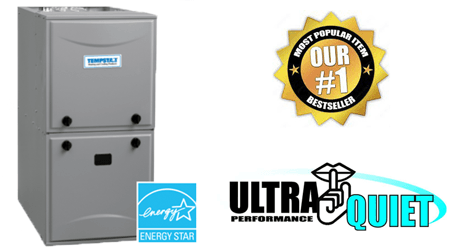
A two stage furnace with a Variable 25-speed blower motor provides more consistent indoor temperatures and operates ultra-quietly.
Tempstar 2 stage systems offer:
This is why 2 Stage Tempstar Furnaces have become our #1 seller — not because of the logo, but because they simply perform better where it matters most.

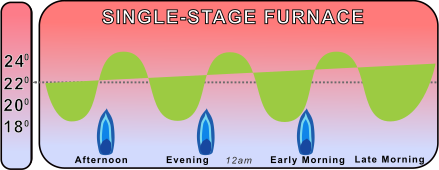
A single-stage furnace operates at one fixed heating output—it’s either ON at full power or OFF. There’s no in-between - only at 100% always.
 Runs at 100% output whenever it turns on
Simple, proven technology
Lower upfront equipment cost
Fewer components = straightforward repairs
Reliable heat for smaller or older homes
 Heats the home quickly but may overshoot the set temperature
Temperature can fluctuate more between cycles
Louder operation compared to multi-stage options
Less efficient than 2-stage or modulating furnaces
Shorter run cycles can increase fuel usage
Best suited for homeowners prioritizing initial cost over efficiency
Budget-conscious homeowners
Rental properties
Selling the home

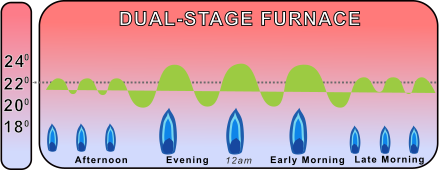
A two-stage furnace operates at two heating levels—a low stage for normal conditions and a high stage for colder days - between 70% and 100%.
Low stage (usually ~60–70%) handles most heating needs
High stage activates during extreme cold
Quieter operation than single-stage
Better temperature consistency
Improved comfort and efficiency
Longer, gentler heating cycles
More even temperatures throughout the home
Reduced hot-and-cold swings
Improved airflow comfort
More efficient than single-stage furnaces
Uses less fuel during mild and average winter days
Balanced option between comfort and cost
Small to larger homes
Families wanting better comfort without top-tier pricing
Customers seeking a noticeable upgrade in performance
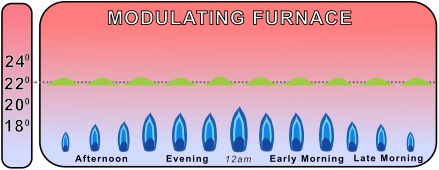
A modulating furnace adjusts its heat output in small increments, matching the home’s exact heating demand - between 40% and 100%.
Continuously adjusts heating output
Extremely consistent indoor temperatures (see notes below)
Ultra-quiet operation
To achieve the maximum comfort and efficiency benefits, modulating furnaces are often best paired with a communicating thermostat. These advanced thermostats allow the furnace to precisely adjust firing rate, airflow, and timing based on real-time conditions in the home. While highly effective, communicating thermostats can be more costly than standard thermostats.
Because a modulating furnace can operate at very low output (as low as 40% capacity), airflow at these low firing levels may not always be sufficient to properly deliver air to:
At low fire, air velocity is reduced, which can lead to uneven temperatures in certain areas of the home.
For homes with multiple levels, long ductwork, or known airflow challenges, a zoning system or airflow-evaluation is strongly recommended when installing a modulating furnace. Zoning allows the system to direct heat where it’s needed most, ensuring:
Proper airflow to all rooms
Consistent comfort throughout the home
Full utilization of the furnace’s modulating capabilities
A heat load calculation is the foundation of a properly designed HVAC system. It determines how much heating and cooling your home actually needs — not guesses based on square footage or the size of the old system. Skipping this step is one of the most common reasons homeowners experience comfort problems.
At Airdrie Air Ltd., we design every heating and cooling system to perform when it matters most — during Alberta’s most extreme weather. Our goal is simple: keep your home comfortable no matter what Mother Nature brings.
With today’s advanced inverter air conditioners and variable-speed furnaces, the dynamics for sizing HVAC systems has changed. Older single-stage systems operated at either 0% or 100%, but modern equipment automatically adjusts to match your home’s exact needs. The result is improved efficiency, more consistent temperatures, and better overall comfort year-round.
We also factor in critical details like blower CFM and the number of supply air vents in your home to ensure your system is properly balanced and performs as designed.
Correct System Sizing
A heat load calculation ensures your HVAC system is not oversized or undersized.
Accounts for Your Home’s Actual Details
A proper calculation considers:
Verification of Proper Airflow (Supply & Return Vents)
Counting and evaluating all supply and return air vents ensures the system can actually be sized right with the
amount of air flow it can deliver.
Airflow is just as important as equipment size.
Improved Comfort, Efficiency & Equipment Life
When the system and airflow are designed together:
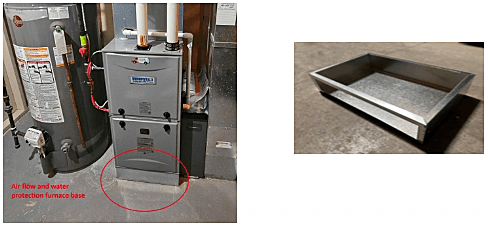
A properly sized furnace base / return air base plays a critical role in system performance. Whenever space allows, we will always install a furnace base.
This provides:
Improved airflow and reduced restriction
Lower static pressure on the blower
Better filtration by allowing proper filter sizing
Improved dust capture and cleaner indoor air
Added flood protection by elevating the furnace off the floor
By elevating the furnace and increasing return air volume, the system can “breathe” properly—leading to better comfort, efficiency, and long-term reliability.
We don’t just install furnaces — we design airflow. When space allows, installing a furnace base ensures proper airflow, better filtration, and long-term system protection
Better comfort throughout the home
Quieter operation
Improved air quality
Longer equipment life
Fewer service issues
A furnace should not just be installed — it should be designed as part of a complete airflow system.
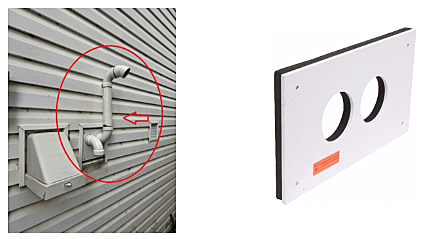
When installing a high-efficiency furnace, the intake and exhaust venting must pass through the exterior of the home—typically through the side wall, front, or rear. While cutting these openings is necessary, how they are finished and sealed is critical to the long-term protection of the home.
After the vent holes are cut, using a solid PVC termination plate is essential. Foam or caulking alone is not a reliable or long-term solution.
Creates a rigid, durable, long-lasting seal
Prevents vent pipes from shifting or moving over time
Provides a clean, professional finished appearance
Protects siding, stucco, brick, and other exterior finishes
PVC will not rot, warp, or deteriorate like wood or improvised materials, making it the preferred choice for exterior wall penetrations.
A correctly sealed termination plate helps prevent:
Water intrusion behind exterior walls
Cold air infiltration and drafts
Insects and pests entering the home
Even small gaps around furnace venting can lead to moisture damage, air leaks, and long-term structural issues if not properly sealed.
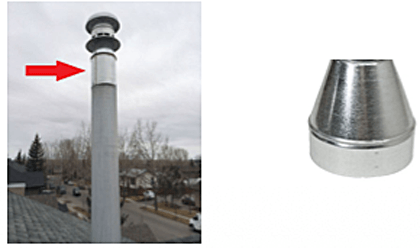
A chimney bullet is designed to install over the existing B-vent where it exits through the roof. Because the vent pipe is smaller than the roof opening, a size difference naturally exists. Without proper protection, this gap can allow water, air, and pests to enter the home.
The chimney bullet serves the same protective purpose as a termination plate on sidewall venting.
When a B-vent passes through the roof, the chimney bullet:
Covers the size difference between the vent pipe and roof opening
Creates a sealed, finished transition at the roof penetration
Prevents movement of the vent at the roof line
Provides a clean, professional appearance
Properly installed, it protects both the venting system and the roof structure.
A correctly installed chimney bullet helps prevent:
Water intrusion dripping into furnace room
Cold air infiltration into the living space
Insects, and pests from entering the vent opening
Chimney bullets are designed to:
Withstand outdoor weather conditions
Maintain a watertight seal over time
Protect the integrity of the Liner and B-vent system
Just like exterior wall termination plates, chimney bullets provide durability, protection, and long-term peace of mind.
Modern furnaces rely on sensitive electronic components to operate safely and efficiently. Power surges — even small, brief ones — can cause immediate failure or hidden damage that shortens the life of your furnace. Adding surge protection is one of the simplest and most cost-effective ways to protect your investment.
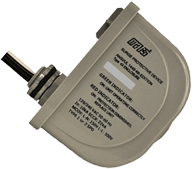
Most power surges are not caused by lightning. They commonly occur from:
Utility switching
Power outages and power restoration
Electrical equipment cycling on and off within the home or neighborhood
Surge protection helps absorb these voltage spikes before they reach your furnace electronics.
Some furnace manufacturers may deny warranty claims if failure is caused by electrical surge damage. Installing surge protection helps demonstrate that the system was properly protected against known electrical risks.
A surge protector is inexpensive compared to replacing furnace control boards, ECM blower motors, or ignition modules — repairs that can quickly reach hundreds or thousands of dollars.
When a new furnace is installed, gas piping and combustion systems are always involved — and in Alberta, this requires a gas permit by law. Pulling a gas permit isn’t just paperwork; it protects your home, your safety, and your investment.
A gas permit ensures gas piping, shut-off valves, venting, and combustion air are installed correctly and safely. Improper gas work can lead to leaks, carbon monoxide risks, poor performance, or fire hazards.
With a permit, a licensed gas inspector verifies the installation meets current gas code. This third-party inspection helps catch issues early and confirms the furnace was installed properly.
Manufacturers and insurance providers may deny claims if gas work is completed without a permit. A permitted and inspected installation protects you if issues ever arise.
Unpermitted gas work can create problems during a home sale or renovation. Buyers and inspectors often request proof that permits were pulled for major gas appliances like furnaces.
Gas codes change over time. A permitted installation ensures your furnace meets today’s safety standards — not outdated or shortcut methods.
At Airdrie Air Ltd., we don’t just install heating and cooling systems — we deliver comfort, accountability, and long-term peace of mind.
Here’s what sets us apart:
BOTTOM LINE:
We do things right, we stand behind our work, and we’re here long after the installation is complete.
